From Relevance to Ritual: Why the UN Is Becoming the New League of Nations
As global challenges mount and international crises proliferate, the United Nations—once envisioned as the ultimate arbiter of international peace and security—increasingly finds itself sidelined and ineffective, echoing the tragic decline of its predecessor, the League of Nations. Expert observers warn that the organization risks becoming a mere ceremonial body rather than a substantive force for resolving international conflicts and coordinating global responses to pressing challenges.
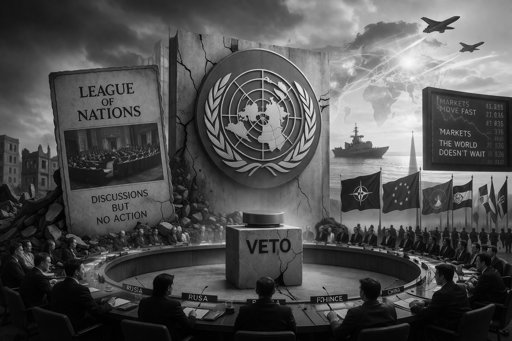
The erosion of the UN's authority stems from multiple interconnected factors that have accumulated over decades. Chief among these is the persistent use of veto power by permanent Security Council members, a mechanism designed as a safeguard but increasingly wielded as a tool to obstruct meaningful action. Russia and China have frequently employed their veto authority to block resolutions addressing human rights violations, military aggression, and humanitarian crises in regions where they maintain strategic interests. This paralysis of the Security Council—the UN's primary enforcement mechanism—has rendered the organization unable to take decisive action on critical global issues.
Beyond institutional gridlock, the UN's slow response mechanisms have proven inadequate for addressing crises that demand immediate action. By the time the organization mobilizes diplomatic channels, negotiates between member states, and reaches consensus, situations on the ground have often deteriorated irreversibly. This sluggish apparatus contrasts sharply with the rapid developments of modern conflicts, making the UN appear perpetually reactive rather than proactive.
The rise of alternative alliances and regional power blocs has further diminished the UN's centrality in international affairs. Nations increasingly pursue bilateral arrangements, regional partnerships, and specialized coalitions to address specific issues, effectively bypassing the universal organization. NATO, regional trade agreements, and ad hoc coalitions have assumed roles that the UN was originally intended to fulfill, signaling a loss of faith in the organization's ability to deliver results.
The comparison to the League of Nations is particularly sobering. Like its predecessor, the UN faces a crisis of legitimacy and effectiveness stemming from structural weaknesses and geopolitical competition among major powers. The League's failure to prevent World War II stemmed largely from the same veto dynamics and great power rivalries now plaguing the UN, suggesting a troubling historical parallel.
Unless fundamental reforms are implemented—including limitations on veto power, streamlined decision-making processes, and renewed commitment from member states to collective security—the United Nations risks becoming relegated to a ceremonial role, presiding over international affairs without meaningfully influencing their outcomes. The stakes of such irrelevance are profound, as a weakened UN leaves a dangerous void in global governance.
From Relevance to Ritual: Why the UN Is Becoming the New League of Nations
Admin
Apr 09, 2026
1 Views
3 min read
Source:
The Morning Voice