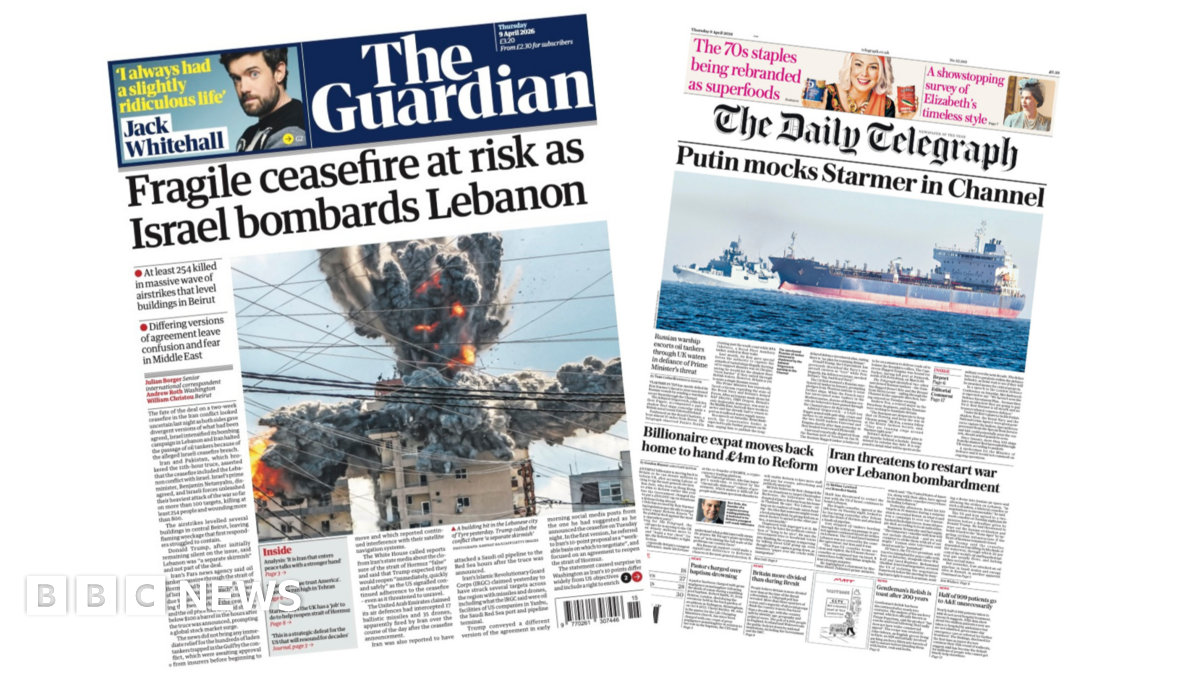
'Fragile Ceasefire at Risk' and 'Putin Mocks Starmer': Newspaper Headlines Reflect Geopolitical Tensions Following Two-Week Truce Agreement
British newspapers on Thursday focused their coverage on the aftermath of a two-week ceasefire agreement negotiated between the United States, Israel, and Iran, with headlines emphasizing both the vulnerability of the fragile peace arrangement and Russia's dismissive response to British leadership.
The newspaper coverage highlights two significant developments shaping current international relations: the precarious nature of the newly established ceasefire and the broader strategic context of great power tensions. These themes reflect the interconnected nature of global geopolitical challenges, where regional conflicts intersect with broader rivalries between major powers.
The emphasis on the ceasefire being "fragile" reflects media assessment that the agreement remains vulnerable to collapse from multiple potential directions. The very act of characterizing the agreement as fragile suggests skepticism about its durability and recognition that numerous factors could quickly destabilize the arrangement. These concerns appear well-founded given the volatile history of negotiations in the Middle East and the presence of multiple actors with competing interests.
The ceasefire agreement between the United States, Israel, and Iran represents a significant diplomatic achievement, requiring substantial compromise from all parties. However, the agreement must survive multiple potential challenges including escalation by non-state actors, Israeli or Iranian domestic political pressures, and external interference from other regional powers.
The second theme in the newspaper headlines—Putin's apparent mockery of British Prime Minister Starmer—reflects broader tensions between Russia and Western powers. As the Western world focuses on the Middle Eastern ceasefire, Russia continues to pursue its own strategic objectives, seemingly dismissing British leadership's diplomatic efforts or positions. This dynamic illustrates how multiple regional and global conflicts compete for international attention and resources.
The coverage suggests that while the two-week truce represents progress in de-escalating Middle Eastern tensions, the broader international security environment remains fragile. Russia's apparent dismissiveness toward Starmer and British initiatives may indicate Russian confidence in its own strategic position or frustration with Western approaches to international affairs.
These headlines collectively paint a picture of a world where recent diplomatic breakthroughs exist alongside ongoing tensions with other major powers. The temporary nature of the ceasefire agreement and the continued assertiveness of Russia suggest that global stability remains contingent on continued diplomatic engagement and the willingness of major powers to maintain agreements.
The coming weeks will reveal whether the two-week ceasefire can be extended or renewed, and whether international attention can be effectively divided between the Middle Eastern crisis and other critical geopolitical challenges.
'Fragile ceasefire at risk' and 'Putin mocks Starmer'
Admin
Apr 09, 2026
2 Views
3 min read
Source:
BBC