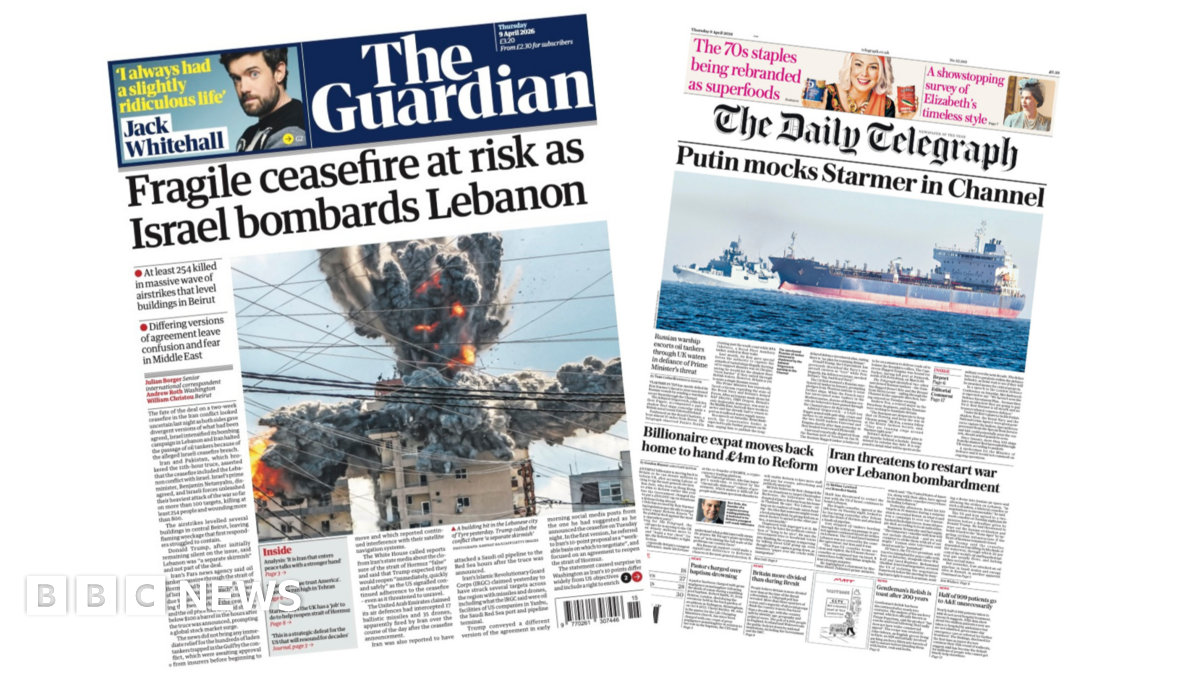
US-Iran Truce Hangs in Balance as War Flares in Lebanon
A fragile two-week truce between Iran and the United States teetered on the brink of collapse on Wednesday as Israel launched a major bombardment campaign across Lebanon, threatening to unravel diplomatic efforts aimed at de-escalating tensions in the volatile Middle East region.
The ceasefire agreement, which had been carefully negotiated between the two regional adversaries, represented a rare moment of diplomatic breakthrough in an otherwise contentious relationship marked by decades of hostility and military posturing. However, the escalating violence in Lebanon has prompted Tehran to issue fresh warnings about resuming military operations, casting serious doubt on whether the agreement can survive the current crisis.
The timing of Israel's bombardment presents a critical challenge to the fragile peace arrangement. Just weeks into the truce, the intensification of military operations in Lebanon raises questions about whether the agreement was sufficiently robust to withstand localized conflicts in neighboring territories. The situation highlights the complex interconnected nature of Middle Eastern geopolitics, where regional actors and proxies can quickly destabilize broader diplomatic arrangements.
Iranian officials have made clear that any perceived violation of the truce agreement or continuation of what they view as Israeli aggression will trigger a proportional response. The rhetoric coming from Tehran suggests that patience is wearing thin, and the threshold for resuming hostilities remains dangerously low. This precarious situation underscores the delicate balancing act required to maintain peace in a region where multiple actors have competing interests and capabilities.
For the United States, the threat of a renewed Iran-US conflict would represent a significant diplomatic setback and a departure from recent efforts to establish dialogue channels and reduce military tensions. American officials have invested considerable diplomatic capital in negotiating and maintaining this truce, and its collapse would complicate broader strategic objectives in the region.
The escalating situation in Lebanon serves as a stark reminder that Middle Eastern peace remains elusive and fragile. The truce between Iran and the United States, while significant, exists within a broader context of regional instability where multiple parties—including Israel, various Lebanese factions, and other regional actors—maintain their own military capabilities and strategic objectives.
As the two-week period progresses, international observers are watching closely to see whether the parties can maintain restraint and allow the diplomatic process to continue. The coming days will be critical in determining whether this truce can be extended or renewed, or whether the region will spiral back into direct confrontation between Iran and the United States.
US-Iran truce hangs in balance as war flares in Lebanon
Admin
Apr 09, 2026
4 Views
3 min read
Source:
GMA Network