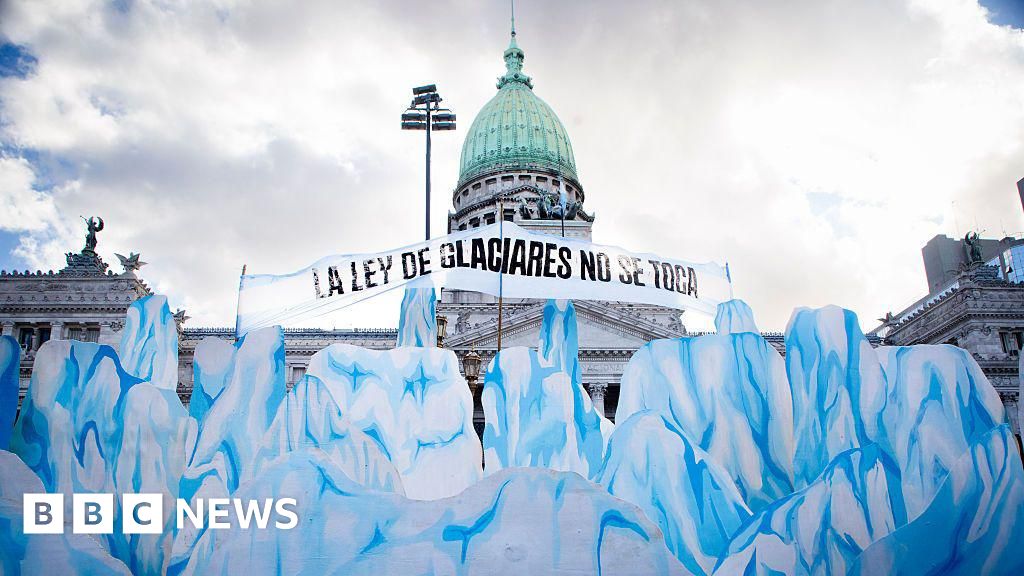
Argentina Passes Controversial Bill Loosening Protections for Glaciers in Sensitive Environmental Regions
Argentina's government has passed legislation that significantly weakens environmental protections for the nation's glaciers, making it substantially easier for provincial governments to authorize mining and other industrial projects in glacier-adjacent regions. The new bill represents a major policy shift that environmental advocates argue will accelerate destruction of critical ice formations and has raised concerns about Argentina's commitment to conservation and climate action.
The legislation fundamentally changes the framework governing how provincial authorities can regulate industrial activities near glacial regions. Previously, stricter protections limited the expansion of mining operations in areas where glaciers were present or nearby. Under the new law, provincial governments gain greater discretionary authority to permit mining projects in these sensitive environmental zones, potentially opening vast areas to industrial extraction that were previously protected.
Glaciers serve critical environmental functions beyond their intrinsic value as natural features. They act as freshwater reserves, feeding river systems that provide water to millions of people across South America. Glacial meltwater supports agriculture, hydroelectric power generation, and municipal water supplies across the region. Loss of glacial ice threatens water security for communities that depend on consistent glacier-fed water flows.
Climate change has already accelerated glacial retreat across Argentina and throughout South America. Rising temperatures have caused significant melting and recession of glacial systems that had been relatively stable for centuries. Scientists warn that continued warming will eliminate many of Argentina's remaining glaciers within decades if current trends continue. Adding industrial pressures through mining in glacial regions compounds the climate-driven threats to these vulnerable ecosystems.
The mining industry has long sought access to Argentina's glacial regions, which contain valuable mineral deposits. Copper, lithium, and other minerals found in mountainous areas near glaciers have significant economic value in global markets. Lithium particularly has become increasingly valuable due to global demand for batteries in electric vehicles and renewable energy storage systems. The new legislation appears designed to facilitate mining expansion to capitalize on these economic opportunities.
Environmental organizations have strongly opposed the bill, arguing that short-term economic gains from mining will be vastly outweighed by long-term environmental costs and water security threats. They contend that once glaciers are destroyed through mining or other industrial activities in adjacent regions, they cannot be regenerated on meaningful timescales.
The legislation reflects broader tensions between economic development priorities and environmental conservation in Argentina. Policymakers argue that mining expansion could generate jobs and export revenue for the nation. Environmental advocates counter that such arguments ignore the true costs of glacier destruction and that sustainable development approaches should prioritize water and ecosystem protection over extractive industries.
International observers have noted that Argentina's move comes at a time when many nations are strengthening climate commitments and environmental protections. The legislation appears counterintuitive to global trends toward greater environmental regulation and conservation. This has drawn criticism from environmental organizations operating internationally and raised questions about Argentina's climate change stance.
The practical impacts of the new law will likely become apparent as provincial governments begin approving mining projects in previously protected glacier regions. Communities dependent on glacial water supplies will watch closely to see whether increased industrial activity near glaciers affects water availability and quality. The full environmental consequences may take years to manifest fully.
Argentina passes bill loosening protection of its glaciers
Admin
Apr 09, 2026
1 Views
3 min read
Source:
BBC