AI-POWERED ROBOTIC GUIDE DOG ASSISTS VISUALLY IMPAIRED USERS WITH REAL-TIME VOICE NAVIGATION
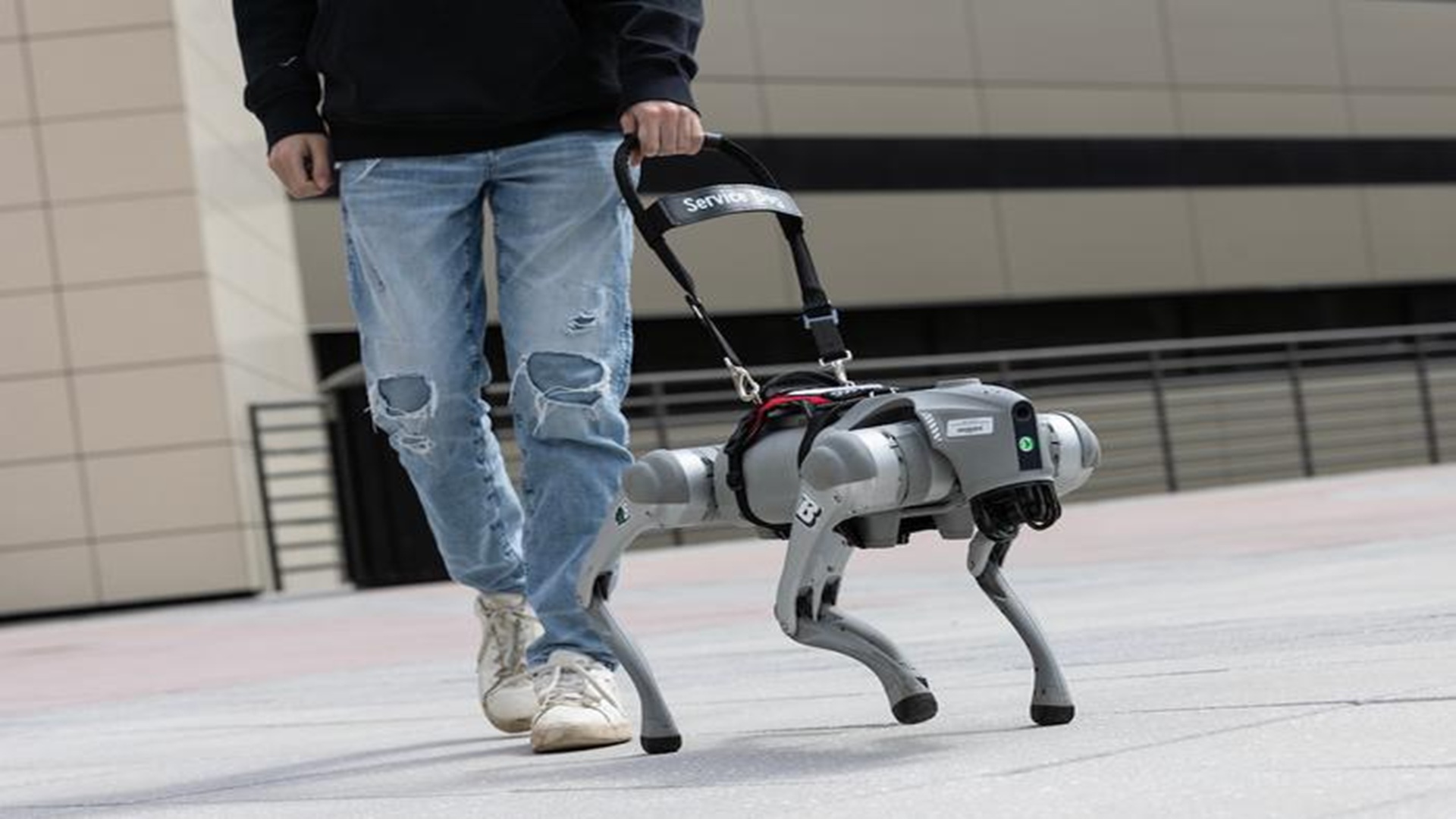
A new breakthrough in assistive technology has emerged with the development of an artificial intelligence-powered robotic guide dog that uses voice guidance to navigate and assist visually impaired individuals in real-time. The innovative device combines advanced robotics, machine learning algorithms, and natural language processing to provide assistance to people with visual disabilities, offering an alternative or supplement to traditional guide dogs and mobility aids.
The robotic guide dog represents a significant advancement in assistive technology, leveraging artificial intelligence and modern engineering to address challenges faced by visually impaired individuals navigating complex environments. Unlike traditional guide dogs, which require years of specialized training and significant financial investment, the robotic alternative can potentially be produced at lower cost and deployed more rapidly to users who need mobility assistance.
The device's voice guidance system provides real-time navigation instructions, alerting users to obstacles, changes in terrain, directions, and environmental hazards. The AI system processes information from various sensors, including cameras, ultrasonic sensors, and potentially LIDAR technology, to understand the environment and provide appropriate guidance. The voice interface makes the system accessible without requiring visual feedback from the user.
Artificial intelligence enables the robotic guide dog to learn from interactions with users and environments, potentially improving its navigation capabilities and user experience over time. Machine learning algorithms can adapt to individual user preferences, communication styles, and navigation patterns, creating a personalized experience for each user. This adaptability represents an advantage over traditional mechanical devices, which lack learning capacity.
The development of this technology reflects broader trends in assistive technology innovation, where artificial intelligence and robotics are being applied to address challenges faced by people with disabilities. Similar technologies are being developed for other disabilities, creating possibilities for improved quality of life and increased independence for people with various physical and sensory limitations.
While the robotic guide dog shows great promise, it does not replace the emotional and psychological benefits that traditional guide dogs provide to their handlers. The bond between a person and their guide dog offers emotional support and companionship that a mechanical device cannot replicate. Therefore, the robotic technology is best understood as complementary to traditional guide dogs rather than a complete replacement.
The technology also raises questions about accessibility and equitable distribution. As with many advanced technologies, initial availability may be limited to affluent users or specific geographic regions. Ensuring that assistive technologies reach people who most need them requires consideration of cost, manufacturing capacity, and distribution networks.
Testing and validation of the robotic guide dog system with visually impaired users is crucial before widespread deployment. User feedback will help developers refine the technology, improve navigation algorithms, and ensure that the device truly meets the needs and preferences of the population it is designed to serve. This human-centered approach to technology development increases the likelihood of creating genuinely useful and effective assistive devices.
AI robotic guide dog talks users through real
Admin
Apr 09, 2026
1 Views
3 min read
Source:
Interesting Engineering